The Ghost in the Feed
What a discredited Cold War experiment reveals about the machinery threatening the Great American Experiment
Within seventy-two hours of Charlie Kirk's assassination on the UVU campus in Utah in September 2025, more than two million posts referencing conspiracy theories about his death had appeared on X alone — roughly double the volume that followed the 2024 attempt on Donald Trump's life in Butler, Pennsylvania, according to CNN. The theories arrived before investigators had even named a suspect, and they arrived from every direction at once: claims that Israel or Ukraine had orchestrated it, according to Encyclopedia Britannica; claims that the shooter had Antifa ties, reported by iHeartRadio; and claims blaming “the left” and “the right” alike, according to the Southern Poverty Law Center. All of it moved with the speed and uniformity of a message built to spread — the same uniformity that a Cold War psychiatrist once tried to engineer.
“This was always going to be a catalyst for people’s worst impulses.”
— Mike Rothschild, conspiracy theory researcher, quoted in CNN
In Montreal, Dr. Ewen Cameron tried to manufacture exactly that kind of uniformity, one patient at a time, while running experiments at the Allan Memorial Institute through the 1950s and ’60s, according to The Canadian Encyclopedia. Funded in part by the CIA’s MKUltra program, his method, “psychic driving,” played recorded messages to sedated, sensory-deprived patients on continuous loop; patients “underwent this treatment for as long as 16 hours each day,” the encyclopedia notes. It caused lasting harm and became one of the era’s defining scandals. Psychic driving itself was shut down after the Church Committee’s 1975 congressional hearings exposed MKUltra, but the broader mission it belonged to — using psychological methods, deliberately and at scale, to shape how people think and act — was never abandoned. What Cameron needed a locked room, a tape loop, and weeks of sedation to attempt on a single mind, modern platforms now accomplish on millions of minds at once.
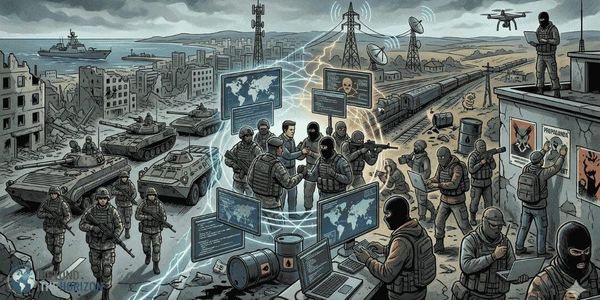
That expansion carried into social media as the platforms themselves grew and evolved. In 2012, Facebook quietly altered the News Feeds of 689,000 users for a week to test whether emotion itself would spread through the platform without anyone knowing they’d been touched. It did: the researchers reported that “emotional states can be transferred to others via emotional contagion,” in a study published in the Proceedings of the National Academy of Sciences. Four years later, Cambridge Analytica showed the mechanism could be aimed intentionally, building psychological profiles from a Facebook quiz app; the firm “harvested private information from more than 50 million Facebook profiles,” NBC News reported, targeting voters with emotionally engineered political ads ahead of the 2016 election. One showed the phenomenon was real. The other showed it could be directed with intent. That broader mission is still being formally refined today: the 2026 National Defense Authorization Act directs the Pentagon to define “cognitive warfare,” benchmarked against observed Russian and Chinese operations, Small Wars Journal reports. Adversaries study each other and adjust in turn, from Ukraine’s StratCom — detailed in a 2025 conference paper on public affairs and information operations — to the Pentagon’s own Red Flag exercises, where The War Zone reports aggressor squadrons continually updating their tactics, because nobody trains against a stationary target.
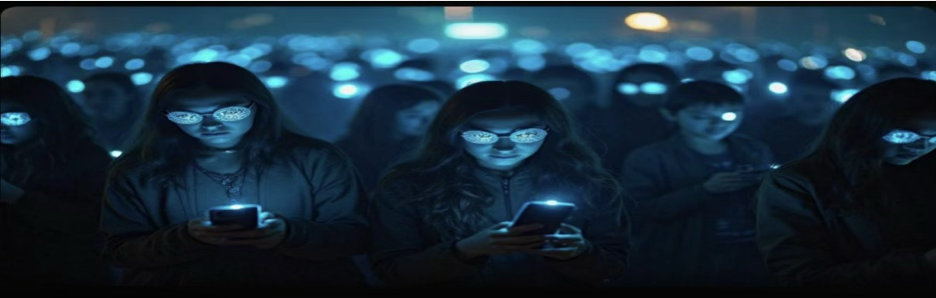
Which brings us back to Kirk and the two million posts. What makes that surge look coordinated is two forces compounding each other: the echo chamber and the filter bubble. Cass Sunstein, who popularized the term, has written that “echo chambers can lead people to believe in falsehoods.” Eli Pariser named the filter bubble in 2011, warning that algorithmic curation “closes us off to new ideas, subjects, and important information.” Kirk’s death spread through both at once, fed by a ranking system that rewards whatever claim hits hardest, true or not. The result reads, from the outside, exactly like psychic driving: a message repeated back to precisely the people most primed to accept it, at a scale no psychiatrist with a tape loop could ever have reached.
Whether that adds up to “manipulation” in a coercive sense is a genuinely contested question, not a settled one. Less contested is what drives it: platforms built to hold attention will always favor whatever holds it, whether the content happens to be true or not. America’s founders called self-government the “Great American Experiment” — a wager that an informed public could reason its way to consensus. That wager assumed people could tell a true claim from a false one. However, it said nothing about a machine that profits from making the loudest lie feel truer than the truth.
Author
 Break The Echo Chamber